A room begins before the cards move
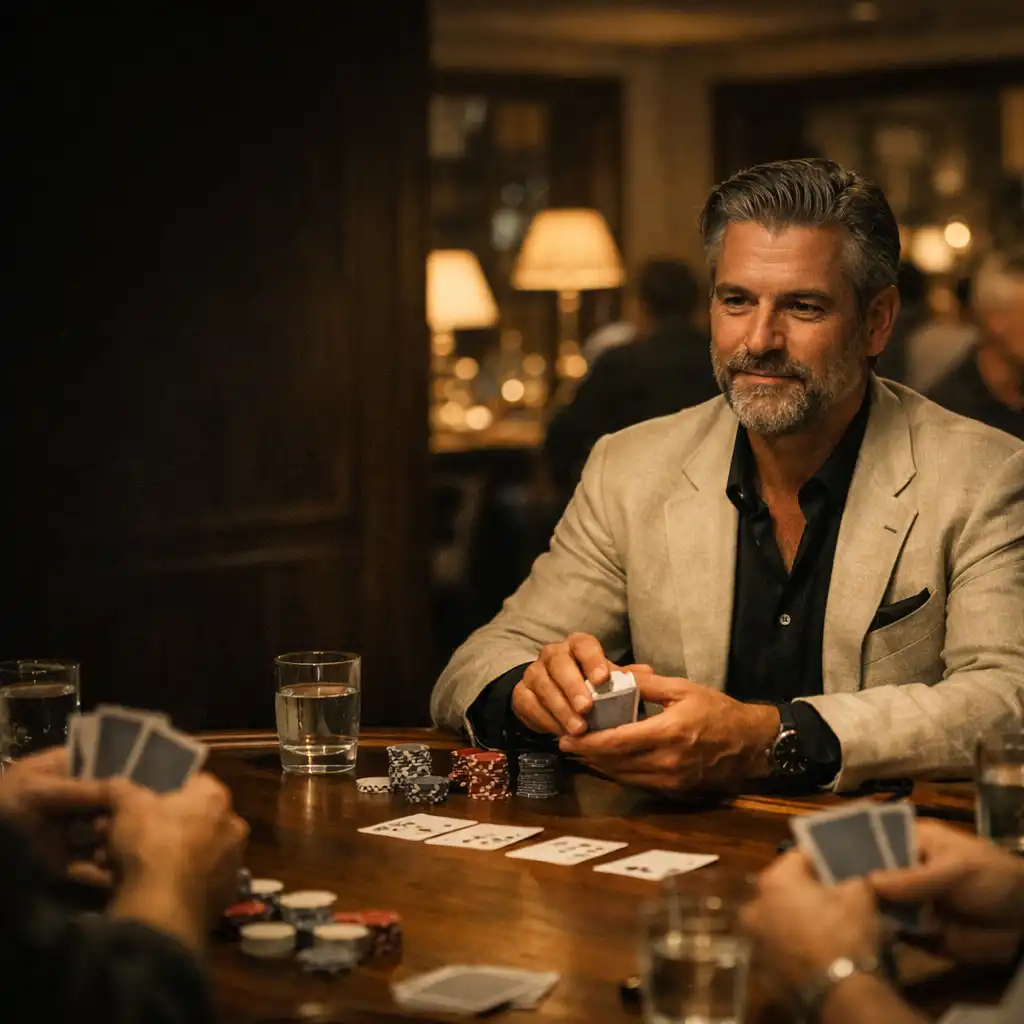
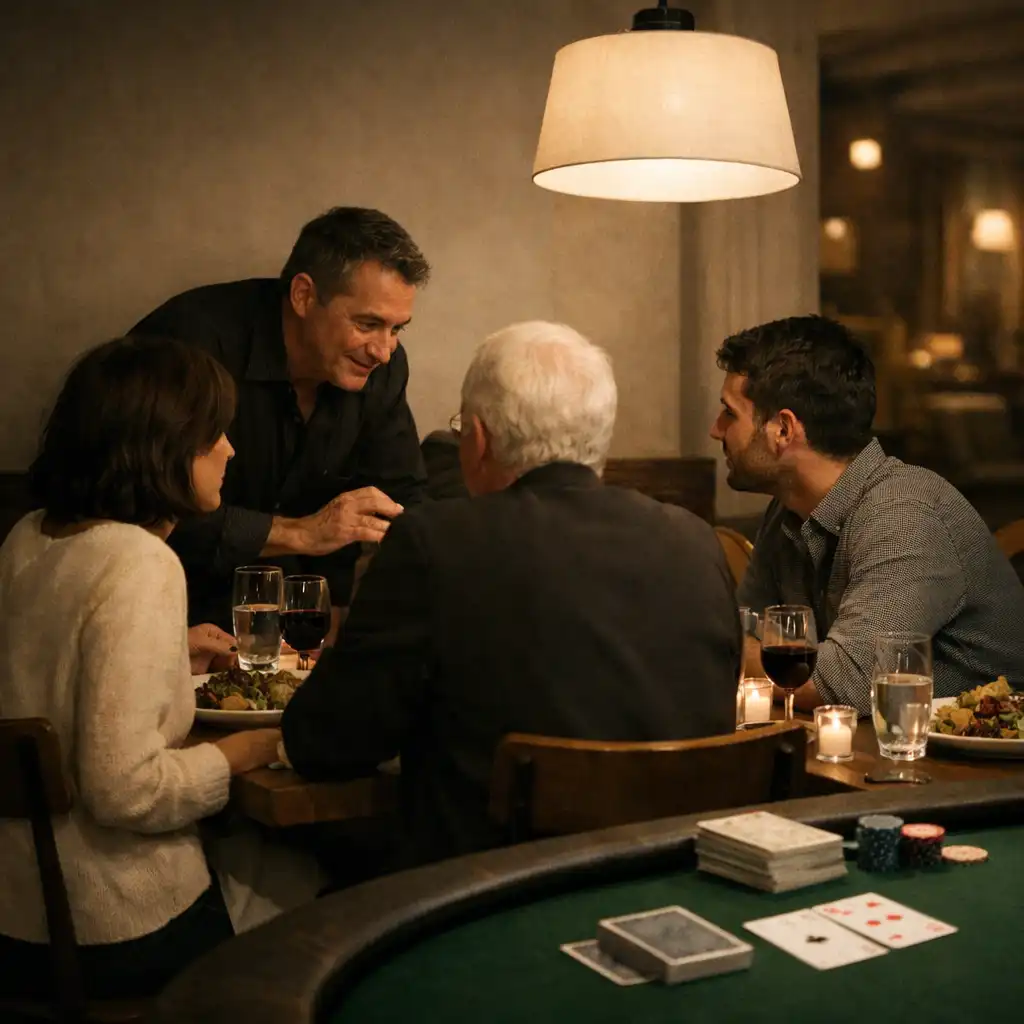
At an in-person poker evening, the first work of hosting is to make the table easy to enter. A greeting, a brief introduction and a little time for seats to settle tell guests that there is no need to arrive already fluent in the room. Around a physical poker table, the host helps shared attention gather without turning it into a performance. Someone coming from dinner and someone joining the card evening can both find their place, hear the table’s pace and feel the evening open gradually.
“The table is allowed a moment to become a table.”
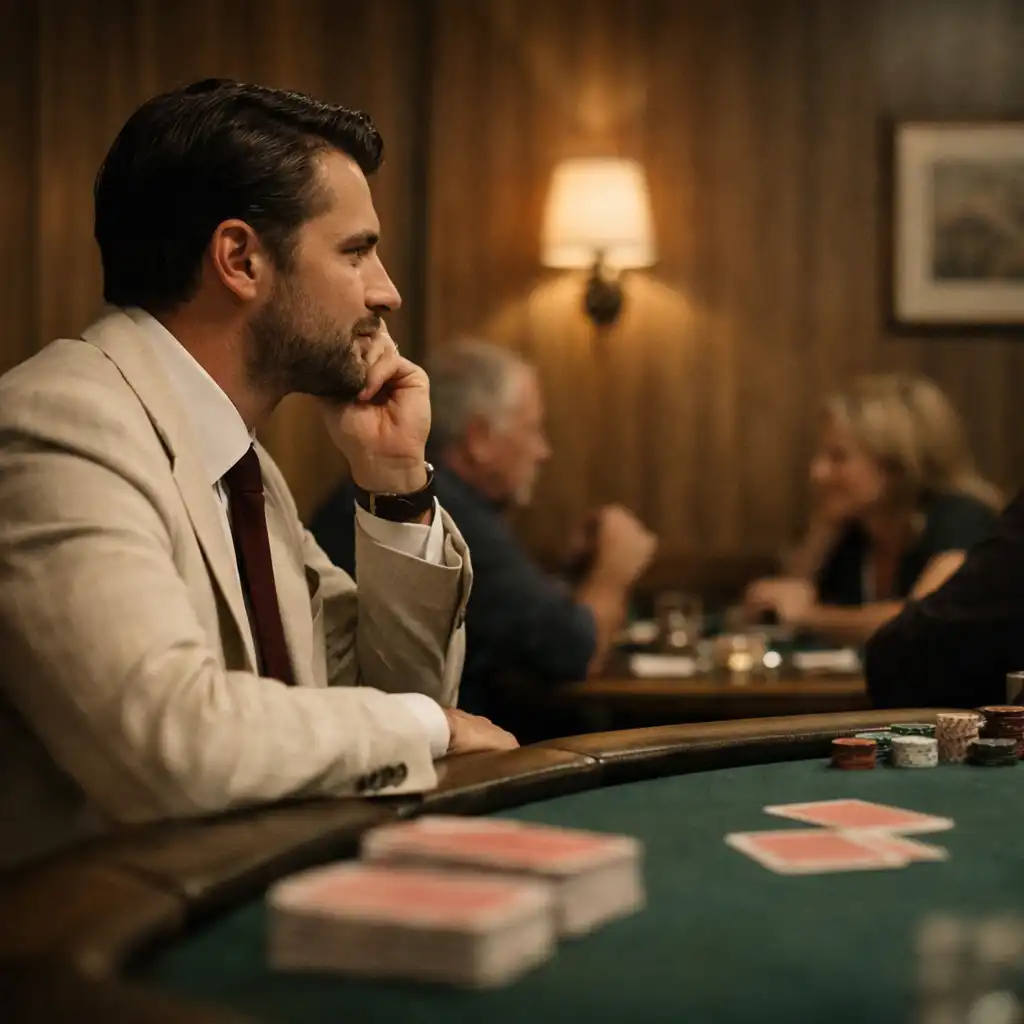
The card lounge and card rooms give that welcome different textures. A lounge can hold the sociable drift of the restaurant around it; a card room can gather attention more closely once people have taken their places. Both are physical settings, shaped by timber, voices, light and the edge of a table rather than a remote screen. The host notices what each space invites, allowing conversation to remain present while the cards ask for a little more focus.
Journal noteGuidance need not take over. A good host keeps transitions clear, senses when a table wants quiet and offers explanation when it will ease the next hand. The rhythm is practical, but it also protects conversation: a way of helping people stay with one another while the evening finds its shape.