
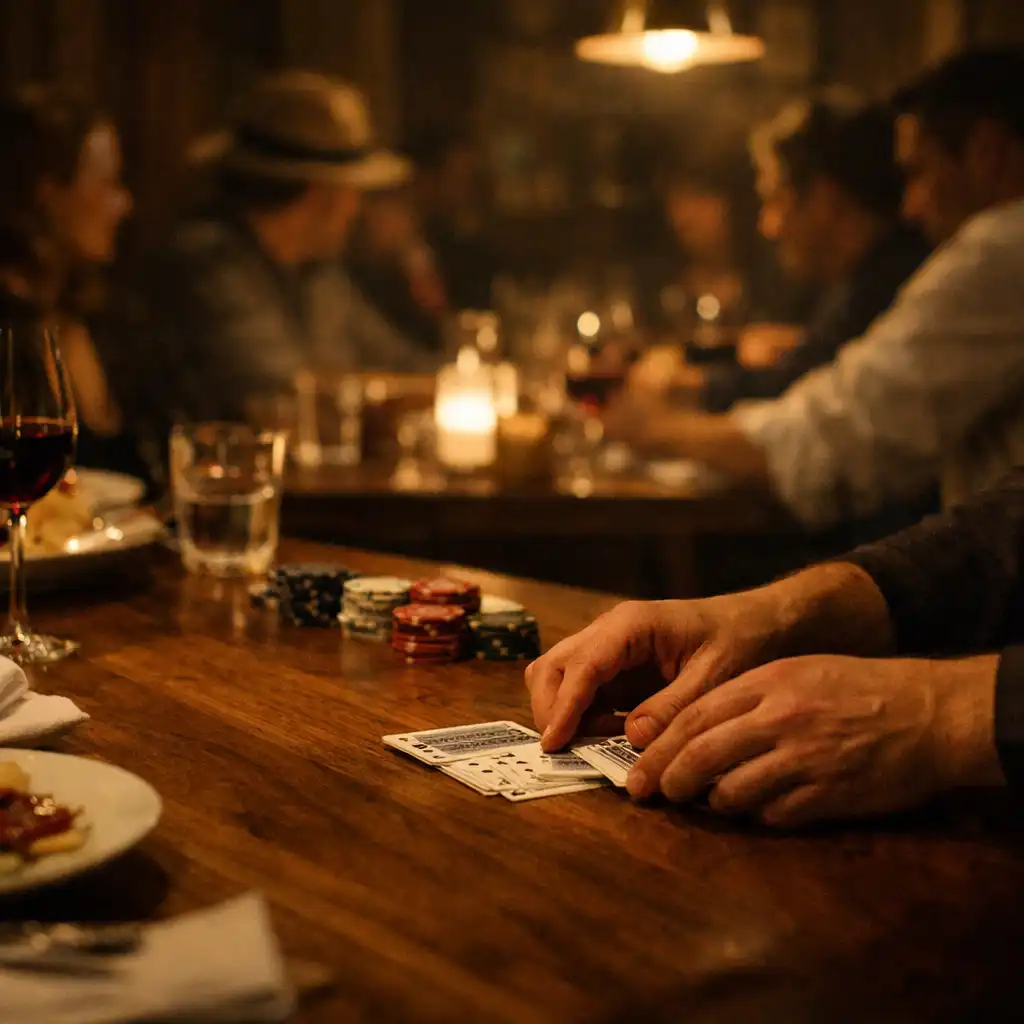
A host arranging cards at a warm timber table during a restaurant card evening
Jubilee & Jack / Restaurant Journal

Where dinner gives way to the table.

Card Lounge · Poker Tables · Australian Evenings

Jubilee and Jack is an Australian restaurant journal for offline poker held physically at the restaurant. Hosted poker sessions, card rooms and dinner courses make an in-person card evening feel paced rather than hurried: guests arrive for the room, settle into table conversation, and move between a considered meal and cards in hand.

01 / The table belongs to the evening

A restaurant, then a room of cards

At Jubilee and Jack, offline poker is not a side attraction added after dinner. It is a real table ritual, held physically at the restaurant, where cards, service and conversation share the same attentive room. The move from a dining table to poker tables changes the pace without leaving hospitality behind. A course can arrive, a hand can pause, and the people around the table remain the centre of the evening.

That continuity gives in-person card evenings their character: dining offers an opening, the table offers focus, and the room keeps both moments connected.

  1. ArriveCome into the restaurant with time to notice the room, the table edge and the first conversation before cards appear.
  2. Settle inLet dining and a physical poker table take turns, with cards in hand and a pause whenever the table needs one.
  3. Stay with the roomKeep the evening social: conversation can return to the dining room, then gather again around the next hand.
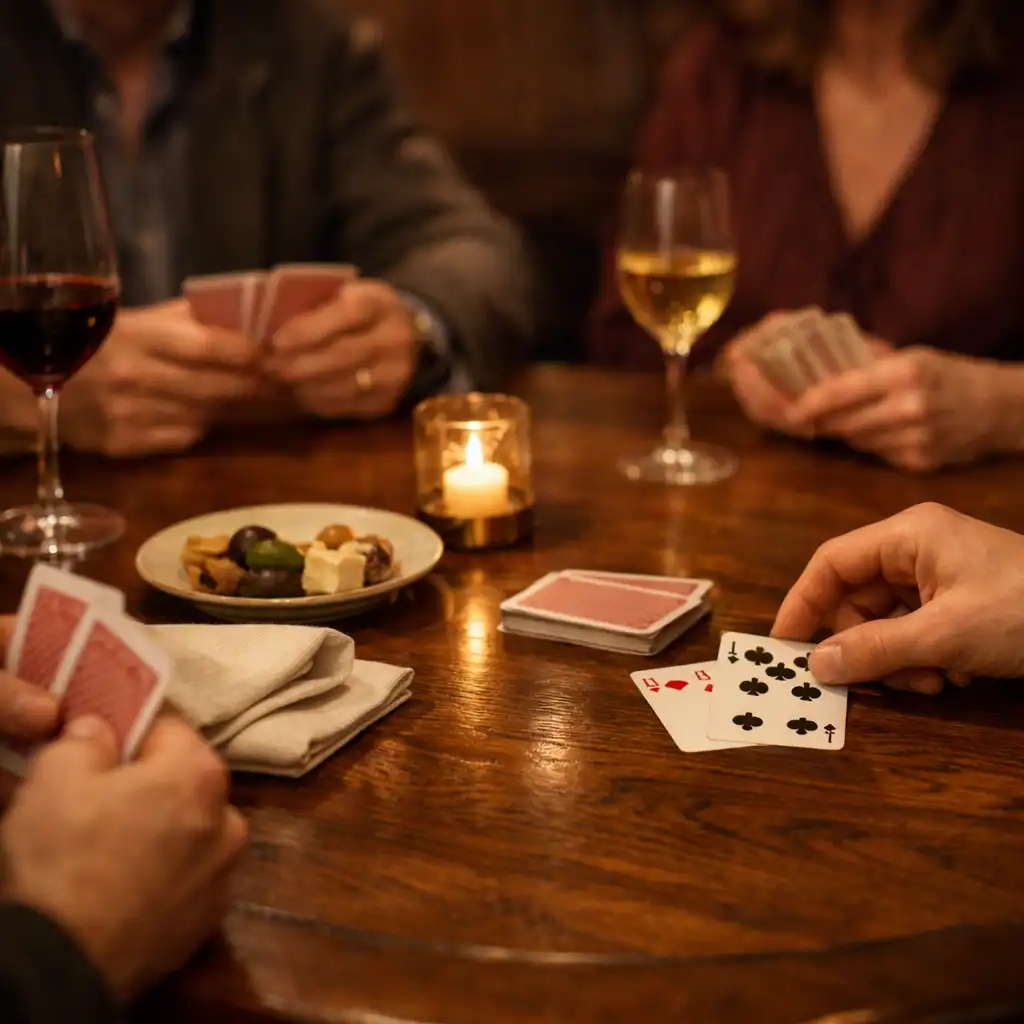
Hands placing cards beside a shared plate and glassware at a timber restaurant poker table
Cards, food and conversation meet at one physical table, each leaving room for the other.
See the visual gallery
Spaces of play

The lounge, the rooms, the host

The card lounge is the social threshold: a place to arrive, recognise the rhythm of the restaurant and ease toward the table. Card rooms carry a more focused kind of attention, where offline poker can sit closer to the people gathered around it. Neither stands apart from the restaurant; each is part of the same physical evening, shaped by warm service, shared conversation and the return of dining between moments at the cards.

Hosts give hosted poker sessions their welcome and their pace. They help a table feel comfortable, keep attention on the people present and make the transition between room, meal and cards feel natural.

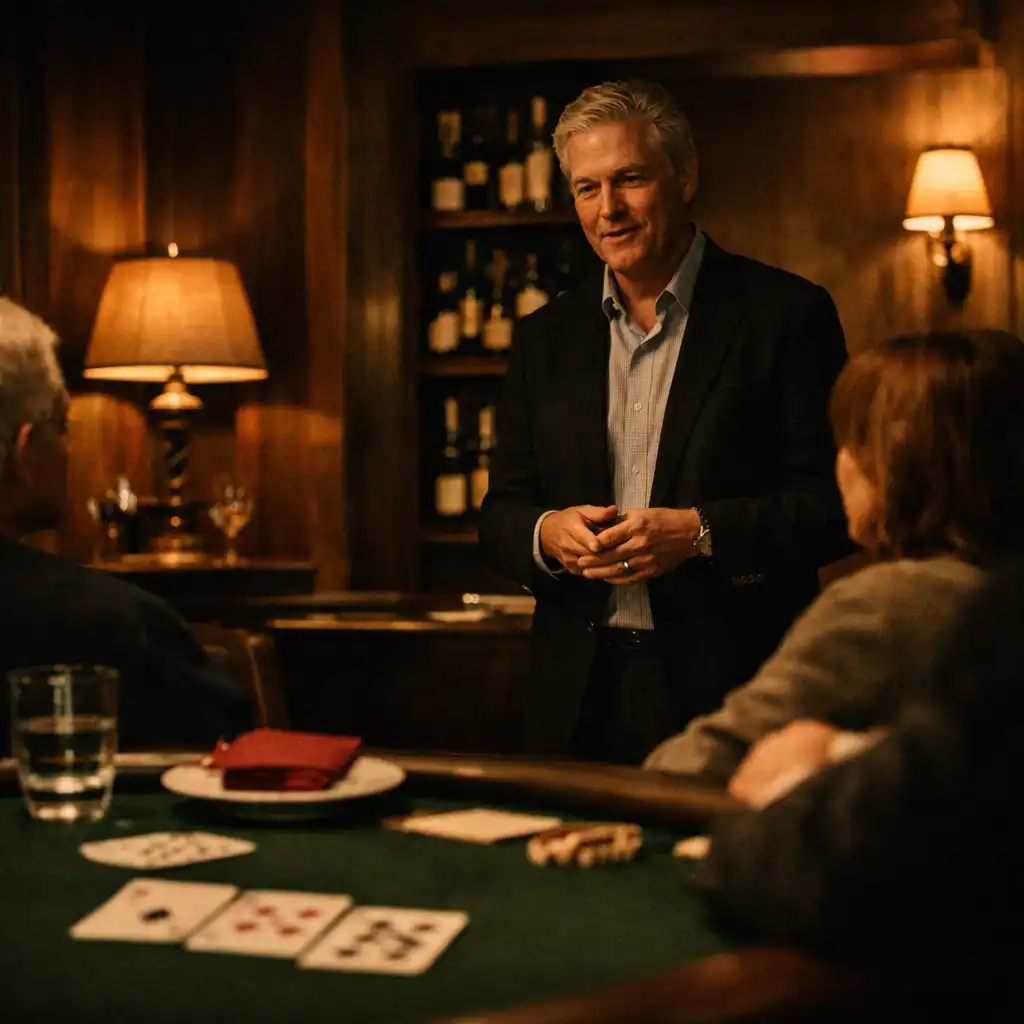
A host speaking with guests around a felt-topped table in a restaurant card room
A host and guests share an attentive, physical table inside the restaurant card room.
Table notes

Formats, read as a table setting

Poker-table formats change the social texture of an evening. A small first table, a host-led gathering or a longer shared session can each give in-person card evenings a different rhythm. These are ways of gathering and pacing the night, not technical rules; the fuller formats journal offers a closer look.

01

The close table

An intimate table leaves room for faces, gestures and unhurried attention. Cards stay visible on the timber surface, conversation stays close, and the physical restaurant setting remains part of every pause. It is a way of gathering that values the small details around a shared table.

Close conversation
Cards in view
02

The hosted table

A hosted table gathers people around a clear, welcoming rhythm. A host helps the room feel settled, offers guidance when it serves the group, and keeps the flow between poker tables and dining room attentive. The result is a shared occasion led by people rather than procedure.

Welcome and guidance
Room-aware pace
03

The long table

A longer shared evening lets dinner, conversation and offline poker return to one another. At the restaurant, people can stay with the room through courses and cards rather than treating either as an interruption. It is a format for lingering together, with the next hand always part of an in-person gathering.

Dinner and cards
One continuing evening
Explore poker-table formats
From kitchen to card table

Dinner keeps the evening open

Dining remains part of the rhythm of an in-person card evening. In a restaurant, a course gives conversation somewhere to land before cards return to the table; a pause lets the room breathe without breaking its thread. Food is not a transactional add-on to offline poker. It is a companion to gathering, allowing people to arrive, settle and linger around the same shared occasion.

That is why dining pairings are read here as moments of pace and attention, not as a menu or a timetable. The restaurant evening is shaped by what happens between hands as much as by what happens at the table.

Read the dining pairings journal
First course

Arriving together

Begin with the table as a place of welcome. Dining opens the conversation before cards ask for attention, so the room can become familiar at its own pace.

Between hands

Leaving room to pause

Let a natural break belong to the restaurant evening. Conversation can widen, service can pass through, and the table can return to cards without losing its calm.

After the table

Lingering with the room

When cards rest, the gathering need not end. The restaurant keeps space for reflection, another conversation and the unhurried feeling of staying together.

Journal / selected readings

Read the room before you arrive

The Jubilee and Jack restaurant journal follows rooms, poker tables, hosts and dining as parts of one table culture. Browse a story before choosing an evening, and meet the card lounge through details of atmosphere, gesture and in-person rhythm.

02

The pace of a hosted table

Follow the welcome, pacing and table attention that shape hosted poker sessions. This story looks at the human work of moving gently between restaurant conversation, cards and the shared focus of in-person card evenings.

Read hosts and evening rhythm
03

A gallery of gestures

Take a quieter visual route through cards, food, hands and card-lounge atmosphere. The gallery observes the restaurant at table level, following the small details that make a physical evening feel present and shared.

Visit the visual gallery
Private gatherings

Keep the table among your own people

For a group that wants dinner and a hosted table to remain with familiar faces, private gatherings offer a considered route into the physical restaurant evening. It is a way to hold dining, conversation and hosted poker sessions within your own group while staying connected to the warmth and attention of Jubilee and Jack.

Begin here

Choose the first chapter

There are two clear ways into Jubilee and Jack. Begin with a restaurant reservation when dining is your first thought, or seek an in-person card evening when the physical poker table is what draws you. Each path starts from the same considered restaurant setting.

Dining first

Begin with dinner

Reserve a table when you want to begin with a considered meal in the restaurant. It is the direct route for visitors led by dining and the atmosphere of the room.

Reserve a table
Cards first

Begin at the table

Join a card evening when you are drawn to offline poker, poker tables and the attentive rhythm of hosted poker sessions held physically at the restaurant.

Join a card evening
A note before you come

Leave room for a question

If your question does not sit neatly with a reservation, a card evening or private gatherings, the contact page is a place to begin. Ask about the restaurant, the card lounge or the shape of a gathering, and continue the conversation through the dedicated contact route.


Contact Jubilee and Jack

A good restaurant evening leaves room for the last course, the next hand, and the conversation between.