
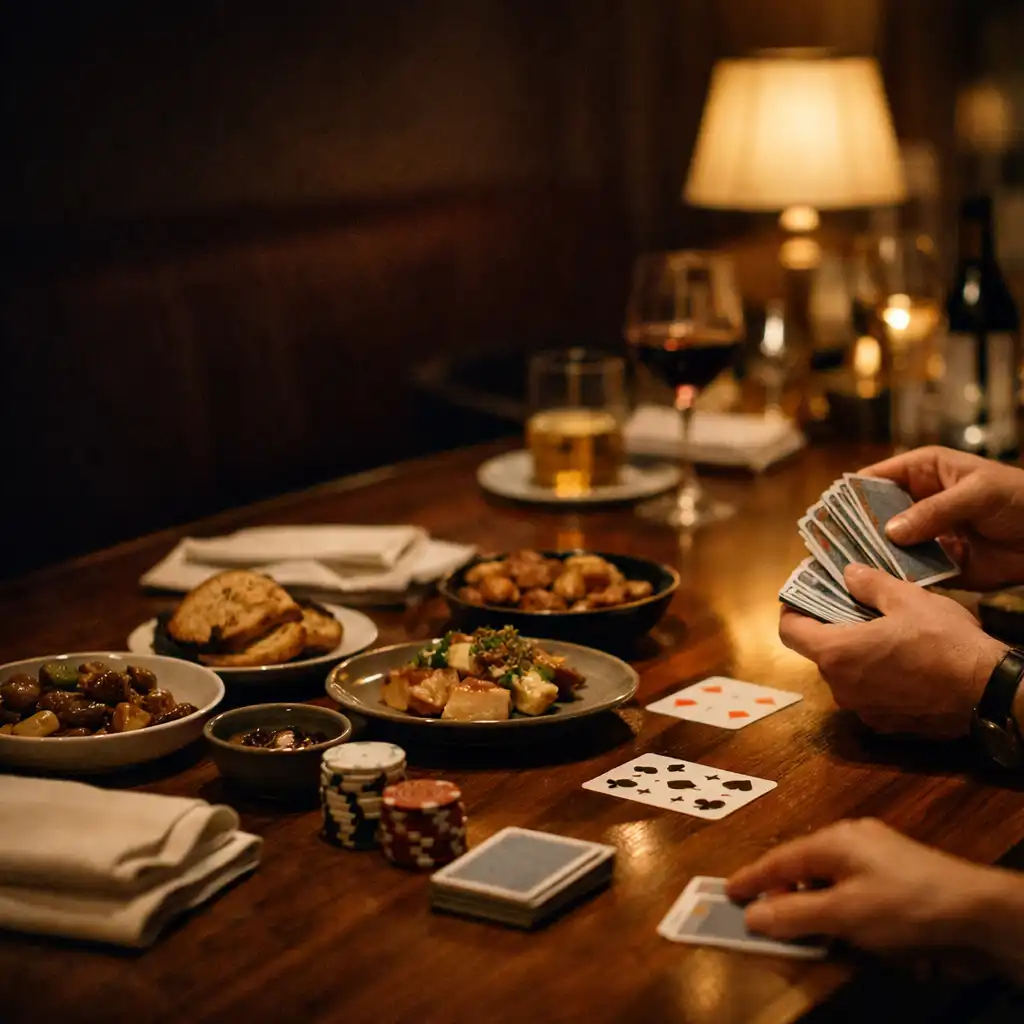
Hands arranging cards beside shared plates on a warmly lit restaurant table.
Issue 04 / Dining pairings

A table with two tempos

Jubilee and Jack is an Australian restaurant journal about the meal and the hand played beside it: offline poker held physically in the restaurant’s card lounge, card rooms and poker tables. Here, hosted sessions and in-person card evenings are considered through pace, shared table space and low-lit hospitality.

Restaurant journal Dining & card evenings At the table
Reserve a table

At the table

The meal is part of the rhythm

A considered card evening need not divide dinner from the room around it. Guests can arrive for the dining atmosphere, settle into food and conversation, and allow attention to gather gradually before physical cards become the focus. In Jubilee and Jack’s card-lounge context, that transition is less an itinerary than a matter of hospitality: a table becoming familiar, a pause opening naturally, and a hosted in-person session finding its place within the restaurant.

There is a useful shared-table language in the small gestures. Water is passed, a plate is moved slightly aside, and conversation makes room for a hand before returning to the meal. At poker tables and in card rooms, attention can change without the table losing its welcome. Food remains part of the setting, while the physical presence of cards gives the group another way to listen, observe and take part.

This is a room shaped by ritual, host and conversation rather than casino spectacle. Hosted poker sessions and in-person card evenings are occasions held among real table edges, dining-room light and people gathered together. The point is not to make the meal disappear when cards arrive, but to let both parts of the evening retain their own calm importance.

A card evening is held in the room, not on a screen.

Pairing principle

Food that leaves room for the hand

For a physical poker table, it helps to think in food that can wait with you. Shared plates and a meal that can be returned to suit a gathering where a thought, a card or a conversation may hold attention for a moment. The aim is not a prescribed order, but a welcoming tabletop: enough room for hands, a clear centre and the ease of reaching for food without making the evening feel managed.

A considered choice can support the host’s guidance rather than compete with it. When cards come into focus, the table still carries its glasses, linen and conversation; service remains part of the room, not an interruption to it. Leaving a little space around the centre makes the physical geometry of the table easier to read and keeps the gathering relaxed for everyone seated there.

The best table keeps a little space for the next conversation.

Food also gives the room a gentle anchor between hands. A shared plate passed along the table can extend the sociability of the evening without asking anyone to step away from it. For visitors imagining a group occasion, these same ideas can help frame a gathering while leaving its character open to the people around the table.

Read about private gatherings
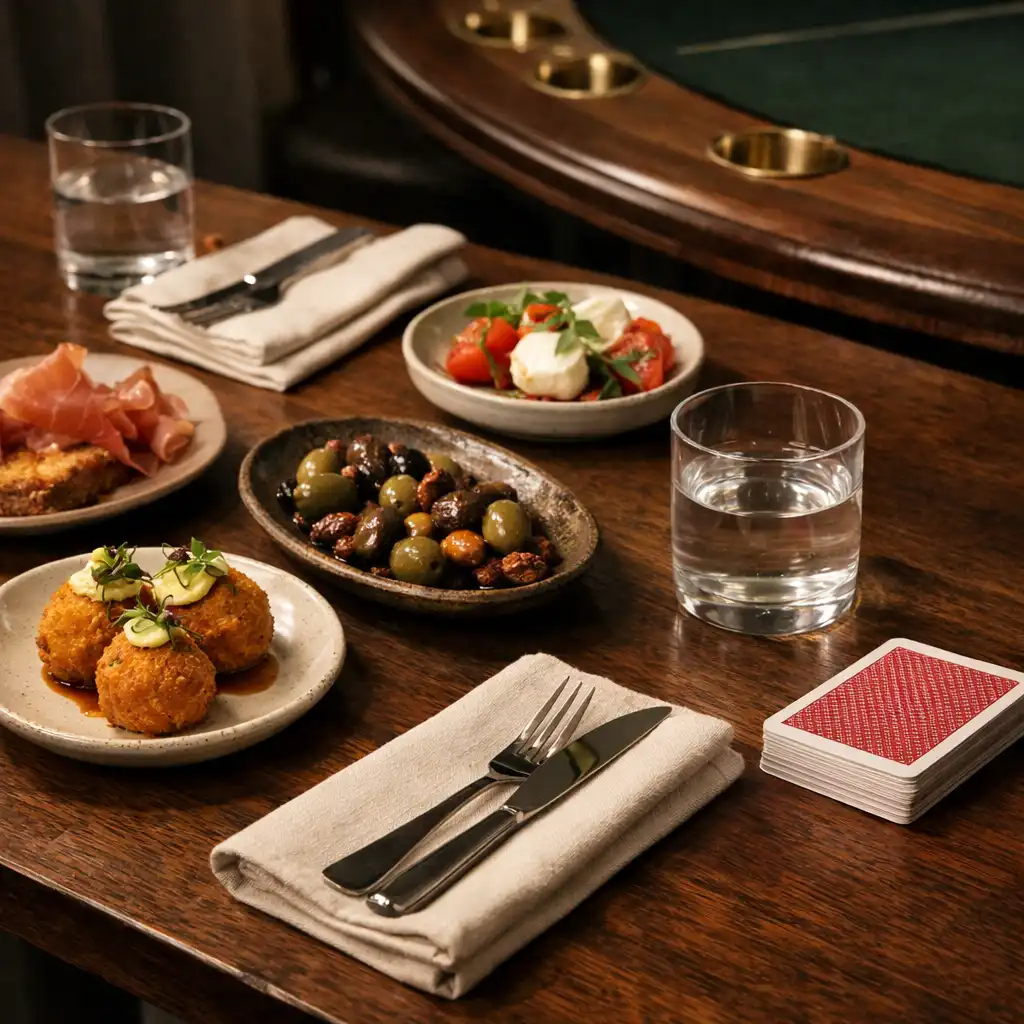
Shared dishes, water glasses and a deck of cards arranged on a timber restaurant table.
Shared food, cards and clear table space can belong to the same unhurried setting.

Evening rhythm

Three movements, one evening

Dinner and hosted poker sessions can feel most at home when attention shifts in distinct but unforced ways. This is not a programme or a fixed timetable, only a useful way to imagine the room: a host helping the group orient itself, food retaining its place on the table, and the physical cards arriving as part of a shared evening.

01

Settle into the room

The first movement belongs to arrival. Dining-room conversation begins, a shared order may find the middle of the table, and people get a sense of who is gathered beside them. In the card lounge setting, there is no need to hurry that recognition. A room becomes more comfortable as small exchanges accumulate, leaving space for each guest to arrive in their own way.
02

Turn toward the table

Then attention can turn gently toward the physical table. A host may help orient the group, while cards, hands and the table’s geometry become more legible. Food does not vanish from the scene; it sits alongside linen, glassware and conversation as part of the restaurant setting. The focus changes, but the room remains a social one, held together in person.

03

Let the room breathe

Between hands, conversation returns with a different texture. Remaining dishes can become an anchor, and the room’s tempo may soften again as guests look up, listen and share a thought. Dining and offline poker meet here not as competing activities, but as two ways of paying attention together. That breathing space is what gives the next gesture at the table its ease.


A good table leaves room for the meal, the hand, and the conversation between them.

Jubilee and Jack journal

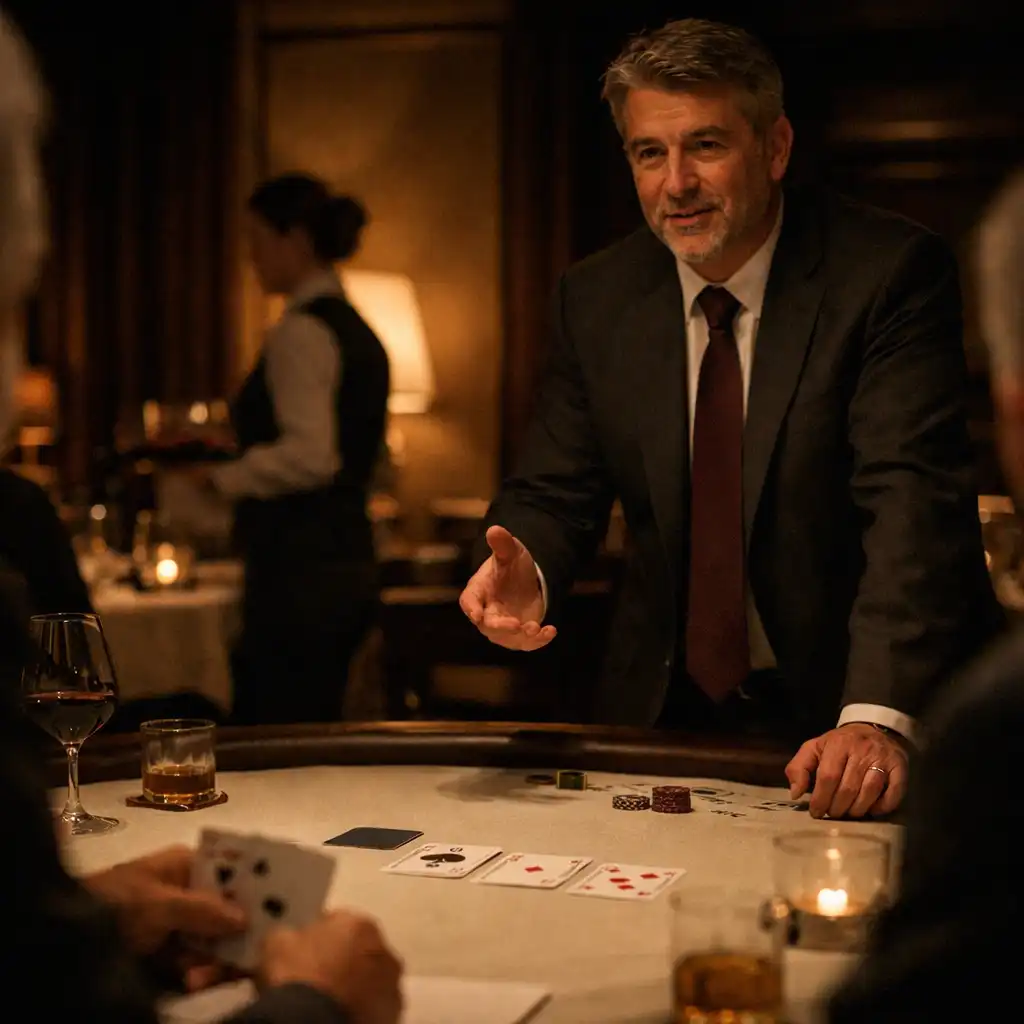
A host addressing a small group beside a restaurant card table in warm evening light.
A host, a physical table and the dining room share the same measured field of attention.
Room and host

Hosting the pause

A host can help make a restaurant card evening feel legible without turning it into spectacle. Through clear orientation, a sense of pace and attention to the group, hosting may give people confidence to settle into the room before cards ask for closer focus. The atmosphere remains social: a table where guests can listen, speak and take in the evening at a considered speed.


The card lounge and card room context gives dining a place to shift rather than stop. Real table edges, live conversation and physical cards can sit alongside the meal without making either feel hurried. Hosted poker sessions are held at the restaurant, so the room itself remains part of the experience: present, shared and open to the small pauses that make a gathering feel human.

Read hosts and evening rhythm

Further reading

Continue at the table

Dining pairings are one view into the broader Jubilee and Jack journal. If you would like to follow the physical table, the host’s social rhythm or the possibilities of a group occasion further, these related features offer a useful next place to read. Each stays close to the room, the gathering and the experience of being there in person.

Formats Poker-table formats

Explore the physical tables at the restaurant and the different ways a group can gather around them, with attention to setting rather than rules.

Hosts Hosts and evening rhythm

Read more about the host, the room and the social pacing of an in-person card evening held at the restaurant.

Gatherings Private gatherings

Consider how the ideas of shared food, table space and conversation can inform a group occasion without fixing its shape in advance.


Table notes

Two notes for a considered table

These are not a menu or an expert prescription. They are simply two ways of thinking about food in a room where conversation, cards and a shared meal meet: keep choices situational, leave space for the people around you, and let the table remain easy to return to.

Before the cards

Start with conversation

Choose food that invites people to stay with one another. Shared dishes, a slower meal, water within reach and an unforced conversation can help the table feel settled before attention changes. The useful principle is not abundance or display; it is an arrangement that lets guests pass a plate, make room for a hand and continue speaking without turning dinner into a service performance.

Alongside the evening

Keep attention uncomplicated

As a hosted in-person card evening takes shape, considered choices can keep the focus on the host, the physical cards and the people nearby. A clear table edge and a little open space are often more valuable than adding more to the scene. In the card lounge or at a poker table, that simplicity supports presence—and makes a reservation or an enquiry feel like the natural next question.

Your next step

Choose your place at the table

Come to Jubilee and Jack for the restaurant experience and reserve a table when you are ready to share the room, the meal and its conversation. A reservation is its own invitation to dine; it does not presume a card evening or a particular kind of gathering.

Reserve a table

If you would like to learn more about a hosted card evening held physically at the restaurant, make a separate enquiry through the contact page. It is a simple way to ask about the in-person setting without assuming dates, inclusion or confirmation.

Enquire about a card evening

Jubilee and Jack returns, always, to the physical room: the dining table, the host, the cards and the conversation that holds them together. Across the card lounge, card rooms, poker tables and in-person evenings, the story is not elsewhere. It is in the attention shared by people gathered at one table.

Jubilee and Jack journal