The room before the first hand
At Jubilee and Jack, dinner and offline poker meet in one physical card lounge: cards on the table, dining close by, and in-person company given time to settle into an evening.
Join a card eveningIn the lounge, the tabletop holds both the meal’s last gestures and the first cards of the evening.
A room that asks people to arrive
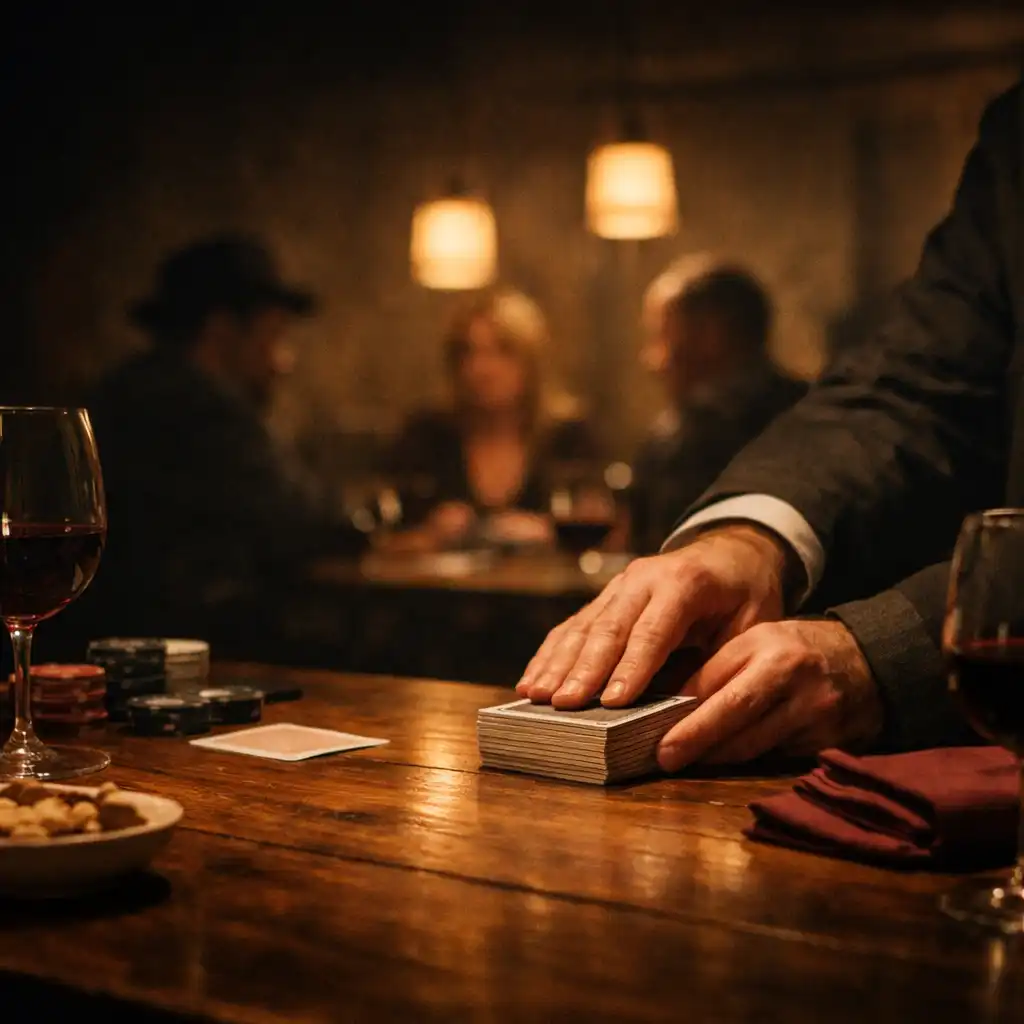
The transition into the card lounge begins as a restaurant transition. A table is set, chairs draw close, and the conversation finds its own volume before a card is dealt. Guests arrive for an evening in person, with the room, the table and the people around it all doing their quiet part.
That is why the atmosphere is not built around spectacle. Offline poker sits inside a shared restaurant rhythm: hands rest near tableware, a host makes introductions, and attention gathers gradually rather than arriving all at once. The lounge gives cards a setting with texture and consequence—real pauses, real glances, and the small courtesy of making room for another person at the table.
Being at the table matters. A host can read the room, guests can notice the edge of a card or the pause before an exchange, and conversation can open again when the hand is over. Nothing here asks for remote participation; every poker moment takes place physically at the restaurant, among people sharing the same evening.
The host gives the table its first rhythm
A hosted poker session begins with a human welcome. The host helps the table find an easy starting point, introduces the room’s pace, and makes the physical setting feel legible before anyone turns their attention to the cards. It is a calm form of guidance: enough clarity for guests to enter the evening together, enough space for each table to develop its own conversation.
The table is part of the story
Table formats shape how people speak, listen and look up from the cards. A different arrangement can change the tempo of a group without reducing the evening to instructions or rules. Jubilee and Jack’s poker tables remain physical, shared places in the restaurant, where the arrangement of guests belongs to the room’s wider rhythm. Explore poker-table formats.
An evening makes room for pauses
A course placed down, a glass refilled, or a chair turned back toward the table can become part of the cadence rather than a break from it. In-person card evenings have room for those small resets. Guests can eat, talk, observe and then return their attention to the cards, with the host and the restaurant setting holding the tempo gently in place.
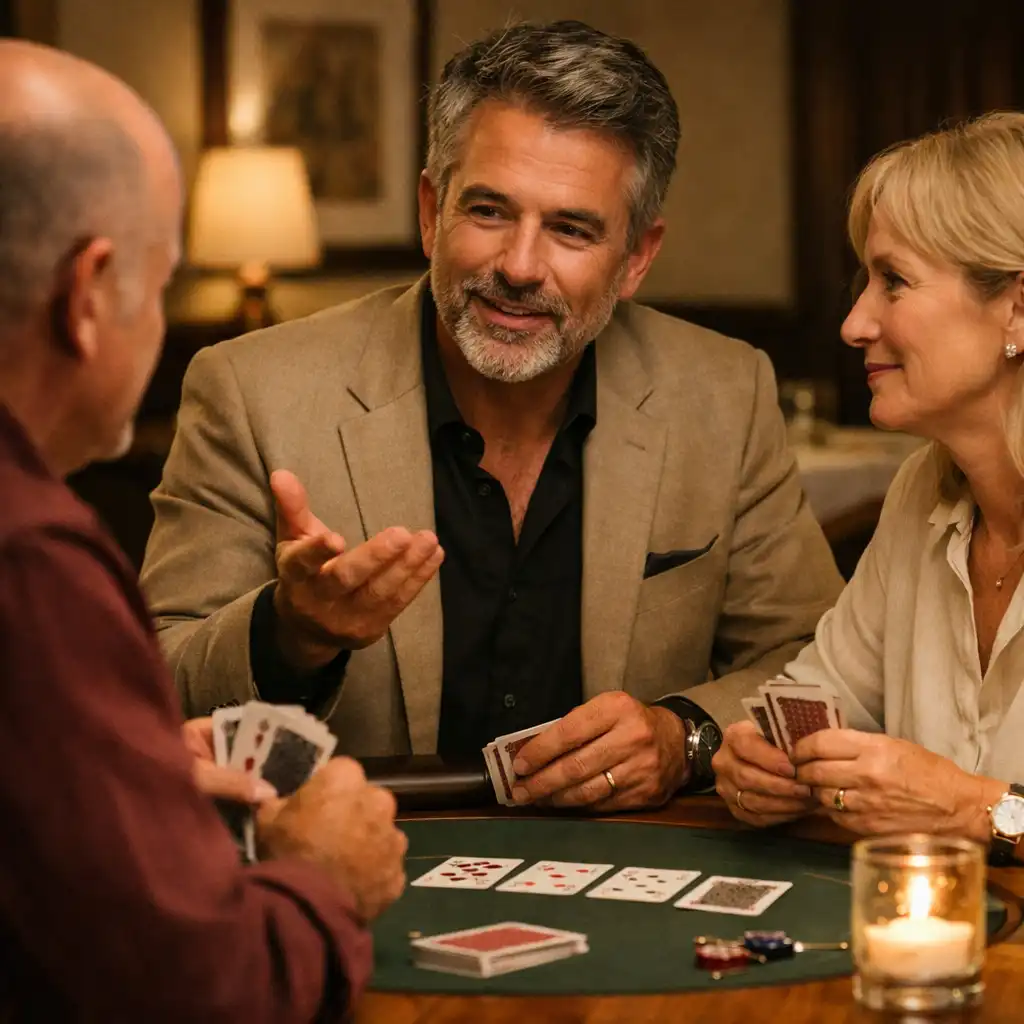
The cards bring focus; the restaurant table gives that focus somewhere to soften, through food, conversation and the company gathered in the room.
An editorial reflection on offline poker, held physically at Jubilee and Jack.
What the meal changes at the table
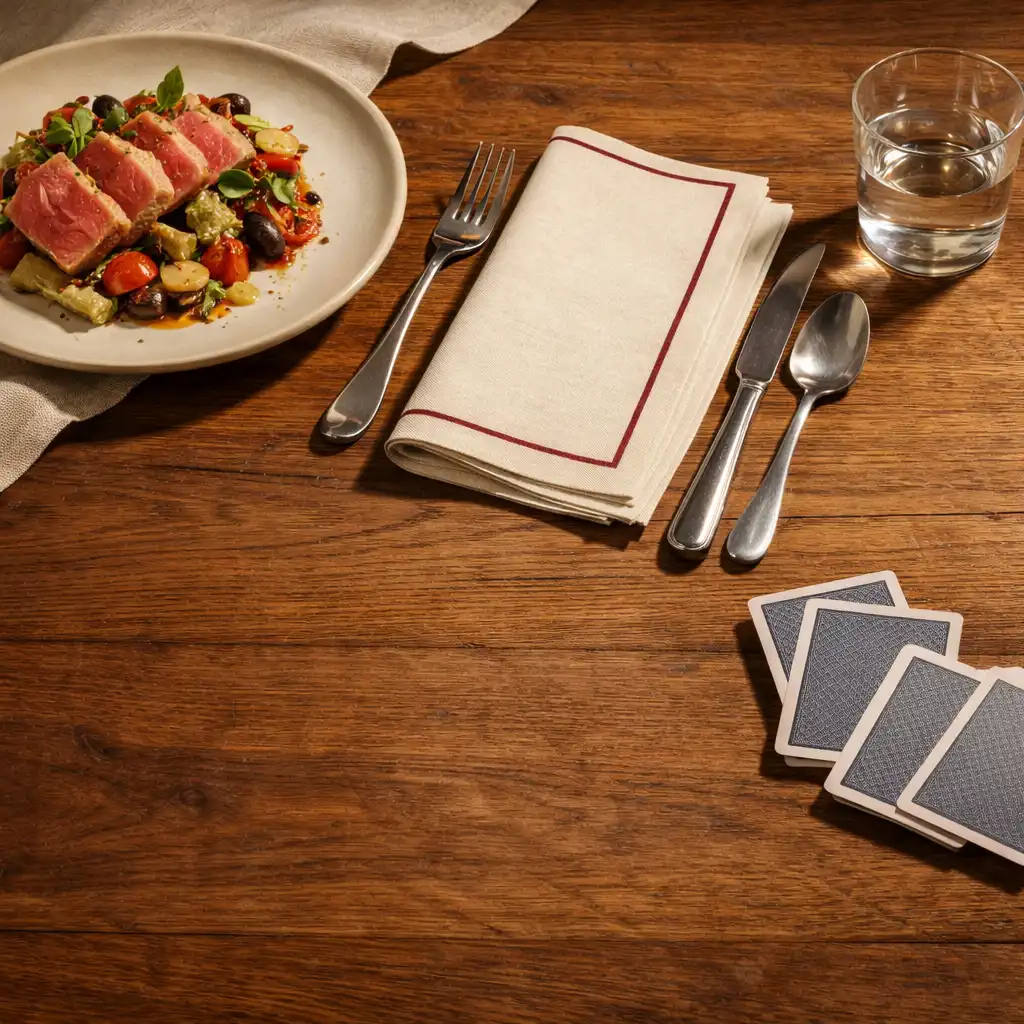
Dinner does not simply sit beside the evening—it shapes it. At a restaurant table, courses create natural resets: a moment to put cards down, take stock of the conversation, and let a new thought enter the room. Shared plates and familiar tableware make space for guests to talk between hands, rather than treating poker as an isolated activity.
The effect is structural as much as sensory. Offline poker remains at the table, but the meal broadens what the table can hold: attention, exchange, observation and a considered pause. Jubilee and Jack approaches dining pairings as part of that social rhythm, not as a fixed menu or a separate promise. The restaurant evening has permission to move at a human pace.
The language of the lounge
The card lounge is easiest to understand as a restaurant setting with a hosted table at its centre. The terms below describe the atmosphere and sequence of an offline, in-person evening without turning the experience into a schedule or a set of promised logistics.
- Card lounge
- A dedicated part of the restaurant where conversation, poker tables, hosts and actual cards can share the same setting. It is a place for in-person card evenings, with the dining room’s hospitality and the close attention of a physical table held together.
- Hosted poker session
- An offline poker gathering held physically at the restaurant, with a host helping welcome guests and establish the table’s pace. The emphasis is on a clear, comfortable beginning and a room that remains easy to enter together.
- Private gathering
- A way to bring dining, card-room atmosphere and a shared table into one considered occasion. It is a useful starting point for guests imagining their own restaurant gathering around cards and conversation. Consider a private gathering.
- Dining at the table
- The meal and the card table are understood as one evening rhythm. There is no claim of a set menu or sequence—only room for food, attention and conversation to sit naturally alongside an in-person card evening.
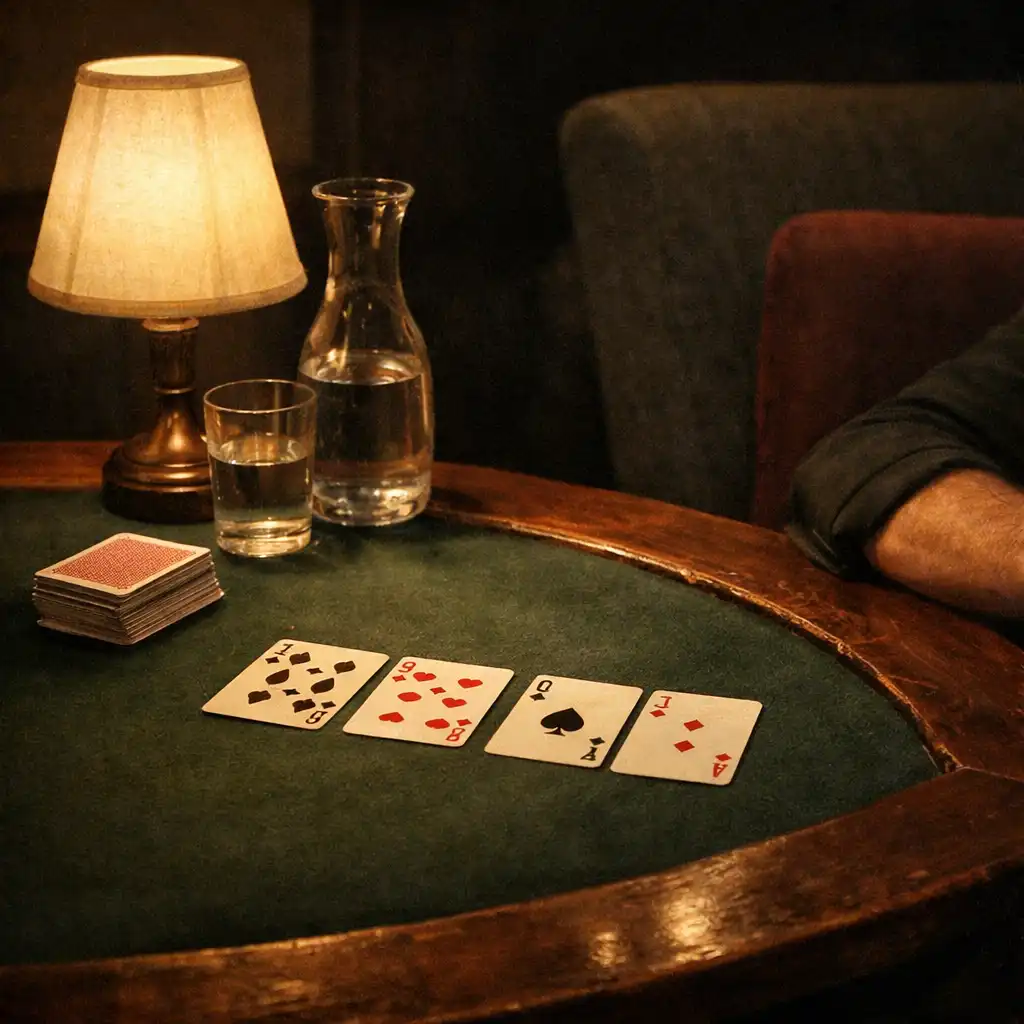
What remains is often the pause around the cards: the room, the shared table, and the people who gave the evening its shape.
That is the lasting character of an in-person card evening at Jubilee and Jack. The cards matter, but they are not the whole memory. Dining, poker tables and gathering create a physical scene people can return to in thought: a chair angled toward the table, a low lamp, a conversation resumed after a hand. The lounge is remembered as a room shared with others, not as an abstract game removed from place.
Choose the evening you want to enter
Begin with a restaurant table, or follow the rhythm of an in-person card evening more closely. At Jubilee and Jack, all poker takes place physically at the restaurant, where dining and company remain part of the occasion.